Hello everyone, this is the recap and prep of my Corsair F31-1DC foil and Pacific dual axle trailer for the drive from San Francisco Bay to the Pumlico Sound in North Carolina. I’m using an E350 Super Duty to do the hauling. I didn’t want to pause this video before actually arriving and to report how everything held up. This video is not sponsored or created to make money just like my other videos. I’m just sharing in the hopes someone will find this helpful.
Route.
I decided on taking the most southern route which is I-10, I-20. It’s boring but can be done in the spring or fall without fear of snow and ice and it’s a little less traffic compared to taking I-40. I did sleep in the boat during my six-day drive and I used paid showers at large track stops which are often cleaner than those found in budget hotels.

Vehicle.
A common question I hear in forums about towing is I have XYZ model vehicle will it tow my boat? Well yes, very likely it’ll tow your boat. My question to you is are you sure it’s going to stop it? And I mean it won’t stop it when it’s fishtailing with a blown tire. Don’t underestimate your tow vehicle weight as a safety factor. Don’t just look at torque and horsepower. Oil change, filter change, all of this should be obvious before you go on a long haul so make that a priority.
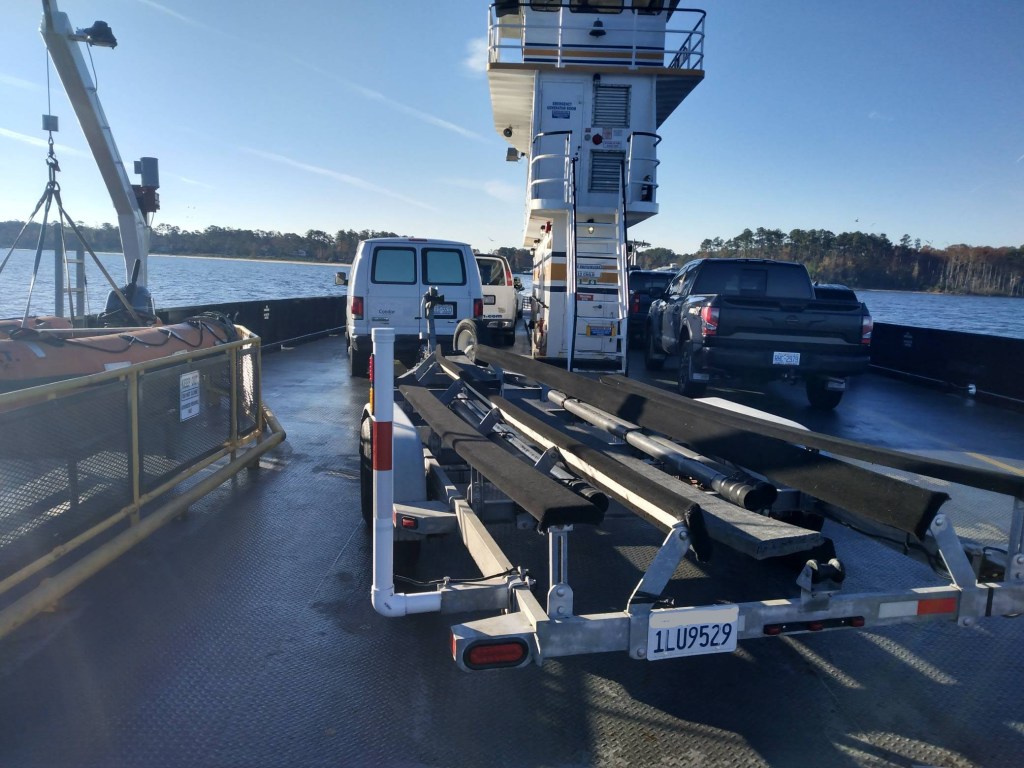
Trailer hitch.
Trailer hitch and receiver obviously play a crucial part in towing safely. I chose a class 5, good for 15,000 pounds and for an extra $100 compared to a regular T-pitch you can get a nice height adjustable solid ball like this.
Trailer brakes.
Having trailer brakes is not only required by law in a lot of places but it’s actually good on your period. I heard somewhere the trailer should slow down your vehicle and not the other way around. I like that. If your current trailer doesn’t have brakes or they’re rusted out like it was in my case, don’t hesitate ordering a disc brake kit like this one. It literally takes only a day to install using basic tools. I was amazed how simple that was and I was hesitant ordering that but literally no problem at all.
When buying trailer brake kits or replacement hubs you’ll see regular ones and what they call vortex hubs. The vortex ones are almost twice as expensive. Difference is the standard ones need to be open to be greased. The vortex ones can be greased externally with a grease gun. Make sure to carry a spare hub with bearing for the long haul.
I use a brake actuator with electric lockout versus manual, meaning when I back up the trailer and I have to get out the vehicle to disengage the surge brake unit, the electric solenoid just triggers the bypass. It’s usually hooked up to your backup lights. I actually have mine on a manual switch which allows for more flexibility.
Tires are obviously crucial both for vehicle and trailer. Buy quality, buy a high ply count and make sure you’re running the right air pressure and that the tire is rated for what your needed load capacity is. I carry two spares for the long haul, not just one.
Tire pressure monitor.
Real-time tire pressure monitoring is super helpful. The cheap sub $50 ones you’ll find on Amazon will likely not have enough range to transmit the data from trailer to the vehicle. I use a unit that comes with a repeater which is mounted to the rear of the vehicle. Mine does pressure and temperature. However, I do recommend to carry an infrared temperature gun as well periodically to check your hub temperature. Your tire temperature sensor may not pick up an overheating hub.
Trailer camera.
Depending on your boat size, backing up the trailer by yourself or changing lanes on a busy highway can be a bit of an adventure. I have a wireless backup camera that mounts to the rear of the trailer. I actually enclosed it in a custom housing just to have a little bit more protection on it. Same as with my tire pressure sensor, transmit range can become an issue if you have a large boat. I actually bought an antenna extension cable which I run forward to decrease the distance to the receiving monitor. The camera unit stays on during the entire drive. It’s not wired to the backup lights. My vehicle also has a backup camera and I put that also on a switch as compared to the standard backup lights. It allows me to check on the front of the trailer mid-drive.
Trailer bunks.
Check your bunks with the boat off. The carpet may still look great but look what I found underneath the carpet. You can get them obviously at any hardware store and the trailer carpet can be found by the foot or by roll on Amazon or elsewhere. Do use marine grade stainless steel staples when installing.
Straps and ratchets.
Strapping and securing the boat to the trailer is obviously important. Don’t undersize your straps or ratchet. Gel coat damage from straps can be avoided by using carpet or in my case I’m using old fire hose as a sleeve.
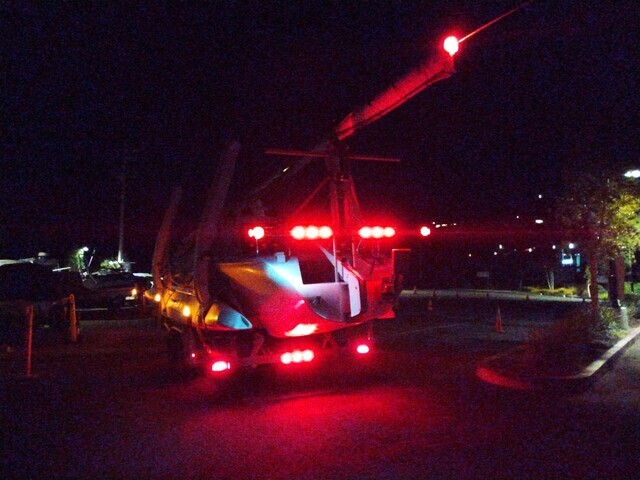
Markers and lights.
Using daytime markers not only helps you maneuver your trailer by yourself better, it’s also great in crowded parking lots giving you a little extra buffer and makes you more visible. Especially for a boat like mine that sits very exposed on a trailer. These marker lights are made of two inch PVC with wooden side for a little structural support. They have lights fitted that just plug in. The markers are not strong enough to serve as guides when launching or retrieving the boat which means they are being removed when done towing. I knew going into it that my middle marker and mounting bracket was the weak spot and guess what no surprise I had to epoxy it mid-drive which by the way was the only issue I encountered during the entire 3000 mile drive.
Some people prefer to drive at night, others prefer driving during the day. There are many pros and cons for both. Ultimately I think it’s personal preference. However if you prefer to drive during the day don’t get caught with a poorly lit trailer. It does may end up getting dark when you might get stuck in traffic. It might start to rain so do light your trailer. If you have a sailboat and your mask overhangs at the end of your boat make sure you have a light at the end of the mast. Also have some sort of traffic cone or contraption that you set up when stopping for fuel that prevents an RV or other taller vehicle to try to drive under your mast.
In summary I had no system failures, no tire blowouts or anything during this 3000 mile drive. Preparation does pay off. Again this was created to just share my experience. If you have tips you wish to share with others or questions just put them into the comments.
 Condor F31-1D C-Foil
You must be logged in to post a comment.